How to Build a Flexible Media Wall Without Committing to Built-In Cabinetry

A media wall has to do more than hold a television. In a living room or home office it often becomes the place where books, records, speakers, display objects, cables and everyday storage all meet. The problem with traditional built-ins is that they solve today’s layout very well, but they can become difficult to change when the room, equipment or household changes.
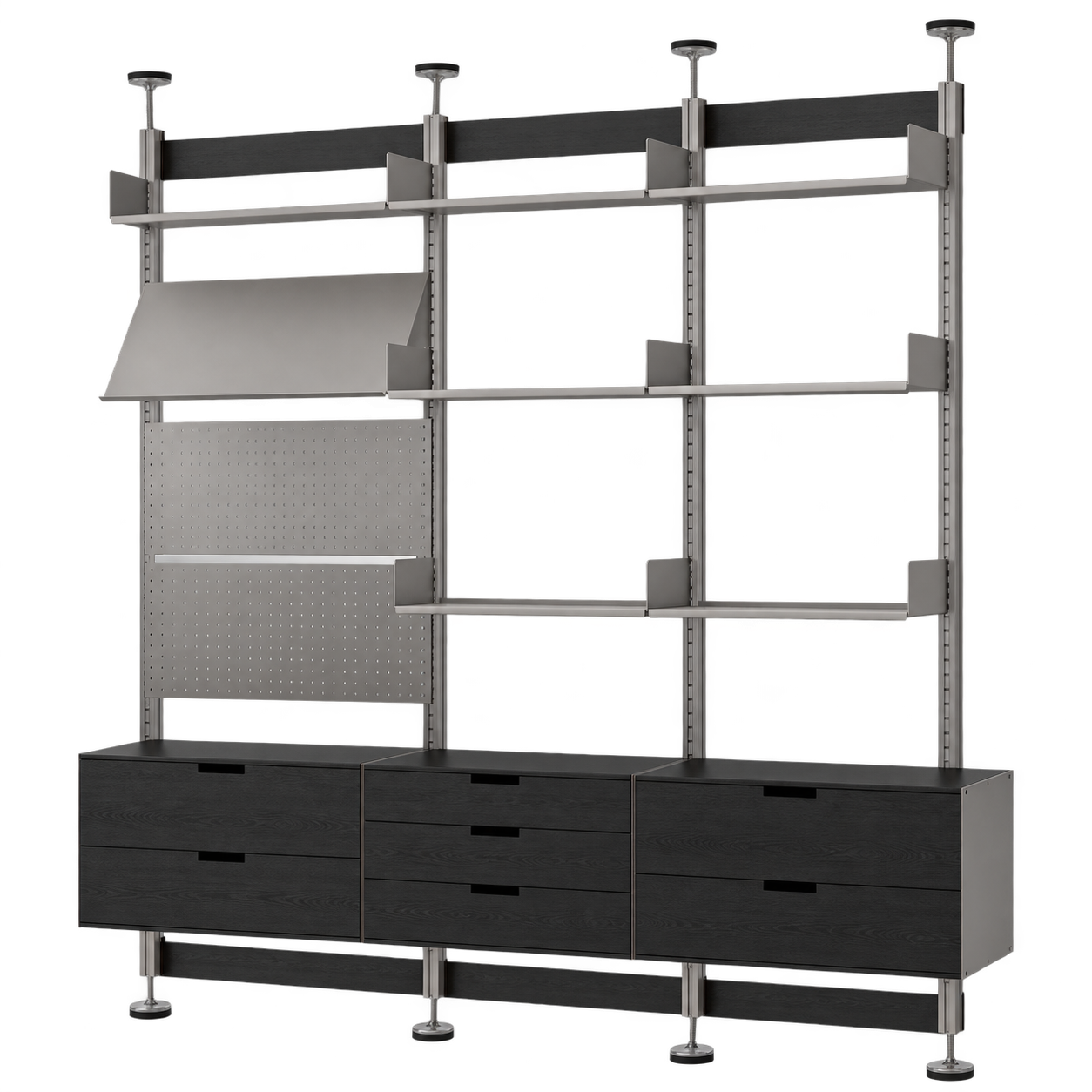
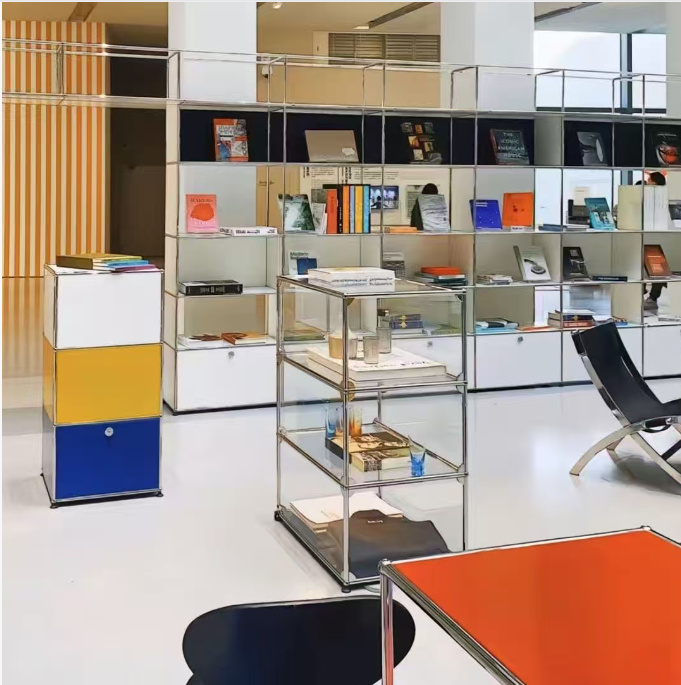
A modular approach starts from a different idea: create a structure that can evolve. The SVEORA Metal Post Modular Media & Storage Wall System uses a slim floor-to-ceiling metal-post framework that can combine open shelves, angled display shelves, perforated organization panels and drawer cabinets. Instead of treating the wall as one fixed cabinet, it treats it as a composition of parts.
Start with the functions, not the furniture
Before choosing shelf positions, map what the wall needs to support. Media equipment needs ventilation and cable access. Books need consistent shelf depth. Records and art benefit from display ledges. Objects that create visual noise are usually better behind drawers or doors. When these functions are separated first, the wall becomes easier to organize and easier to edit later.
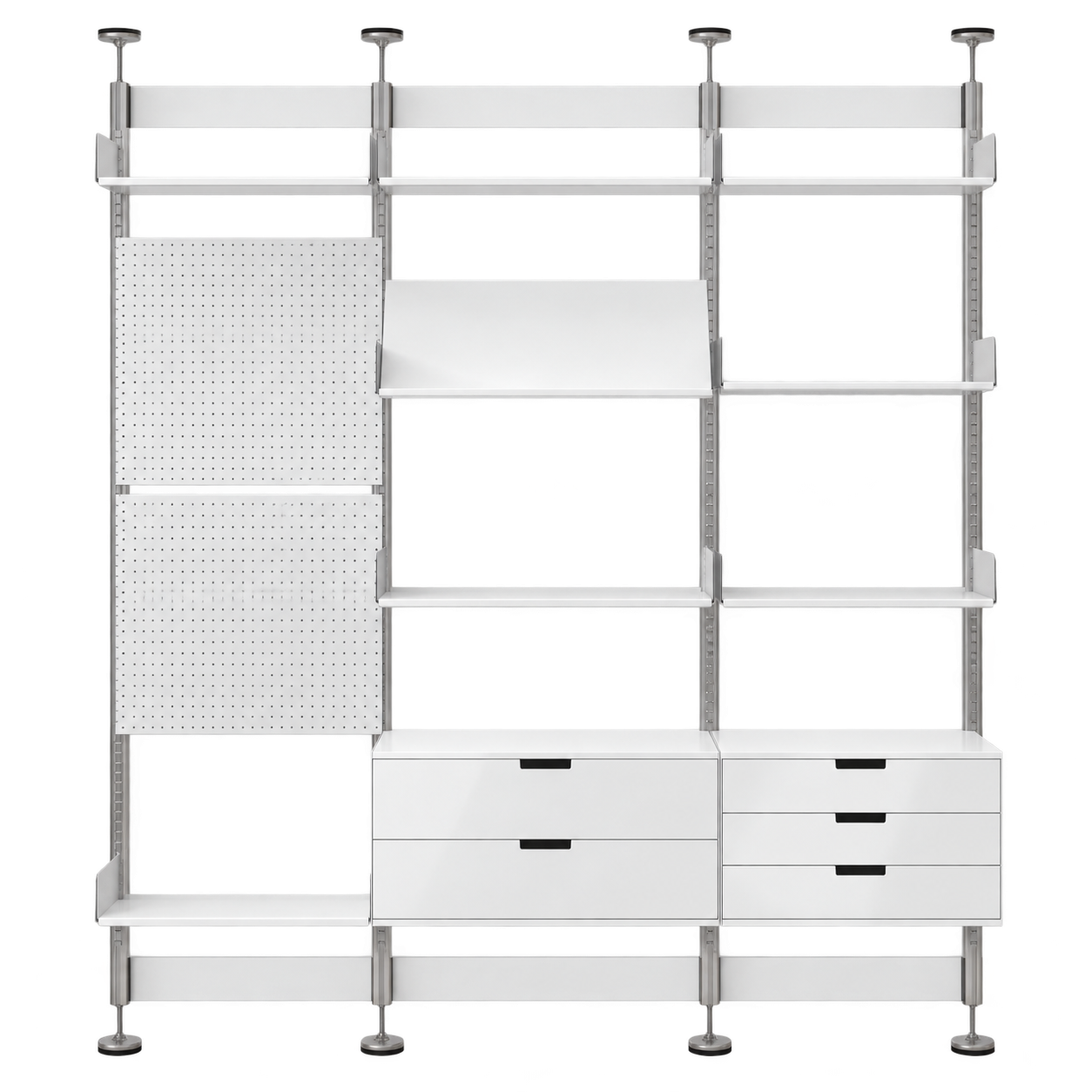
The advantage of a modular frame is that the open and closed areas do not have to be symmetrical. A lower drawer module can visually ground one side while lighter open shelving keeps the other side from feeling heavy. Perforated panels can hold smaller accessories without using a full shelf, and angled ledges can display records, books or artwork without taking the same depth as horizontal storage.
Use vertical space without making the room feel full
Floor-to-ceiling systems can add a large amount of storage without creating the visual mass of a full-height cabinet. The key is to leave intentional negative space. A few empty shelf bays often make the entire composition feel calmer and more architectural.
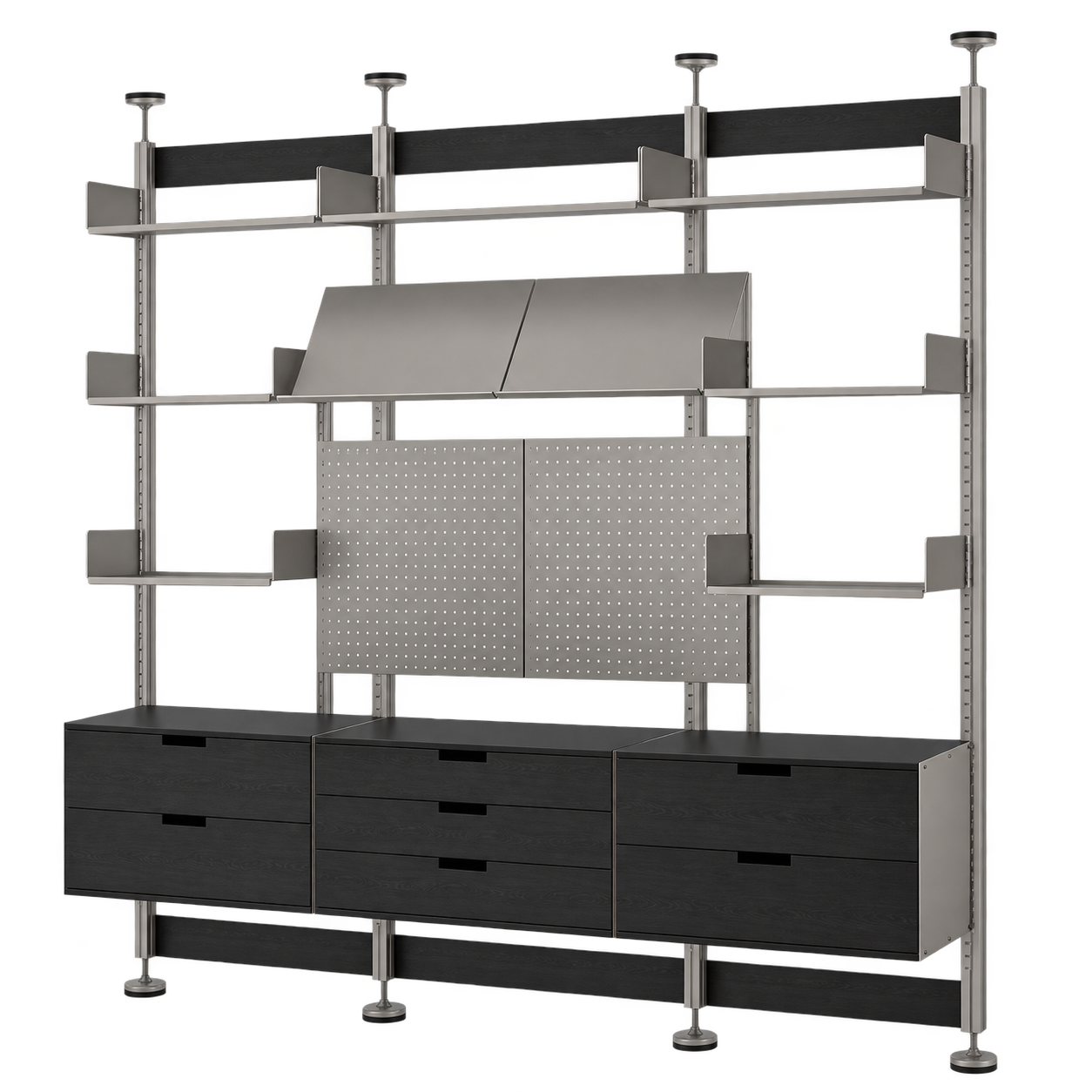
Material choice changes the effect as much as the layout. Wood finishes such as walnut make a media wall feel warmer, while white, sand gray and matte gray can help a large arrangement recede visually. Dark finishes can create a strong graphic frame, especially when the room already has light walls and flooring. Because the SVEORA system offers multiple panel finishes, the structure can be tuned to the room instead of forcing the room to adapt to the furniture.
Plan for technology to change
Televisions, speakers, game consoles and streaming devices change faster than cabinetry. A useful media wall should allow equipment to be replaced without redesigning the entire room. Keeping some bays open, maintaining cable routes and avoiding an overly tight television niche can extend the life of the layout.
This is where modular systems are most useful. A shelf can become display space; a display section can later hold books; a drawer module can move into a home-office configuration. The furniture is not locked to one purpose.
Think of the wall as part of the room’s architecture
A successful media wall should connect visually with the rest of the interior. Aligning shelves with nearby door heads, window lines or desk heights can make the system feel built into the architecture even when it is modular. Repeating one or two materials elsewhere in the room—such as a wood tone, black metal detail or neutral panel finish—also helps the wall feel intentional.
A practical media-wall planning checklist
- List the television, speakers, consoles, books and display objects the wall must support.
- Measure the wall width, ceiling height and the depth available for shelves.
- Allow ventilation and accessible cable routes around electronic equipment.
- Place heavier or frequently used items on shelves that are easy to reach.
- Keep some open space so the arrangement does not feel visually crowded.
- Choose finishes that connect with the room’s flooring, furniture or architectural details.
The goal is not to fill every available centimeter. It is to create a framework that can absorb change. For rooms that combine media, storage and display, that flexibility can be more valuable than a perfectly fitted cabinet that cannot evolve. Explore the SVEORA modular media wall system to see how open shelves, display panels and closed storage can be combined in different proportions. Before finalizing a layout, review the SVEORA Product Size Guide to plan shelf dimensions and available space. If your room has specific width, height or equipment requirements, contact SVEORA to discuss a suitable configuration.


Please send me a catalogue with prices. I am from South Africa
Hello friend, you can reach us via the WhatsApp or email address on our website.