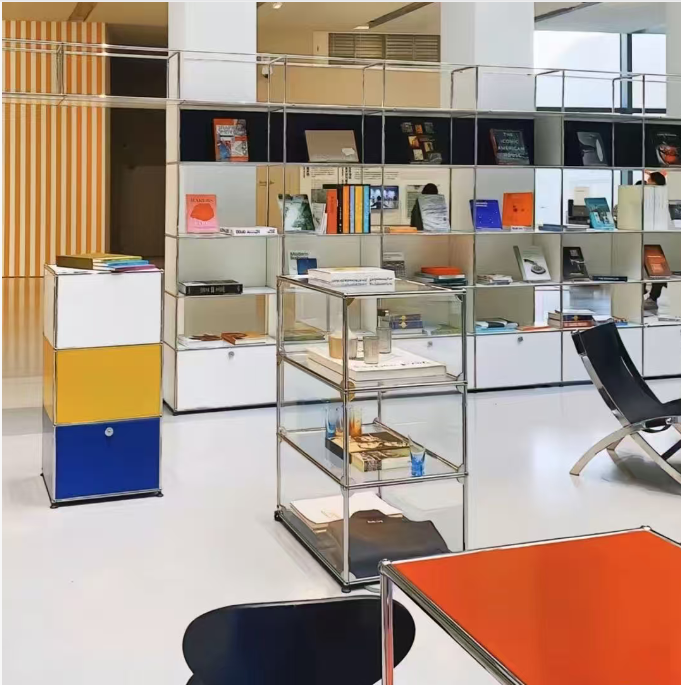
Mobile Storage That Moves With the Room: Designing Flexible Everyday Zones

Storage usually gets treated as something fixed: a cabinet against a wall, a sideboard in one permanent position, or a shelving unit designed around a single room. But many contemporary interiors are no longer used in only one way. A dining area may become a work zone during the day. A living room may need to support coffee service, media accessories, books and entertaining. A studio or project space may need storage to move as the activity changes.
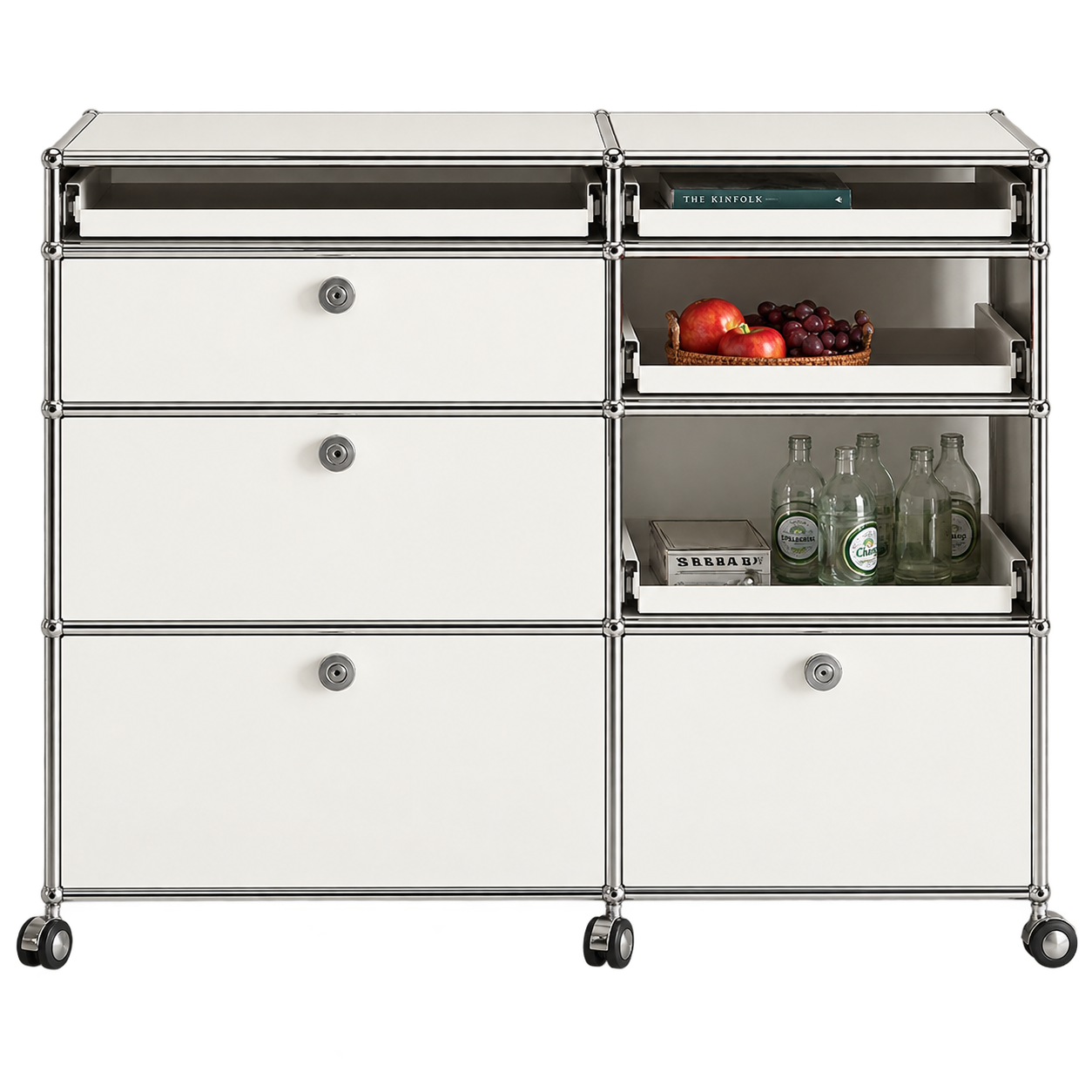
That is where mobile modular furniture becomes especially useful. The USM Modular Mobile Storage Cabinet with Pull-Out Trays combines caster wheels, pull-out trays, enclosed compartments and open storage in one compact modular unit. Rather than solving one fixed storage problem, it can support several different roles depending on where it is placed and what the room needs at the time.
Why mobility changes the way storage works
A cabinet on wheels is not simply a normal cabinet that happens to move. Mobility changes how the piece can participate in a room. Instead of planning circulation around fixed furniture, the furniture can respond to circulation. It can sit beside a dining table during meals, move closer to a sofa when used as a drinks or media station, or roll into a work area when supplies are needed.
This is particularly useful in rooms with overlapping functions. In a small apartment, one open space may serve as living room, dining room and occasional workspace. In a larger interior, the same principle applies to flexible project areas, home offices or multi-use family spaces. A mobile storage unit can support activity where it happens, then move away when more open floor area is needed.
Use pull-out trays for the things that need quick access
Pull-out trays work best for items that are used often but do not need to remain visible all day. Coffee accessories, notebooks, chargers, table linens, serving pieces or frequently used tools can stay close at hand without taking over the top surface of the cabinet.
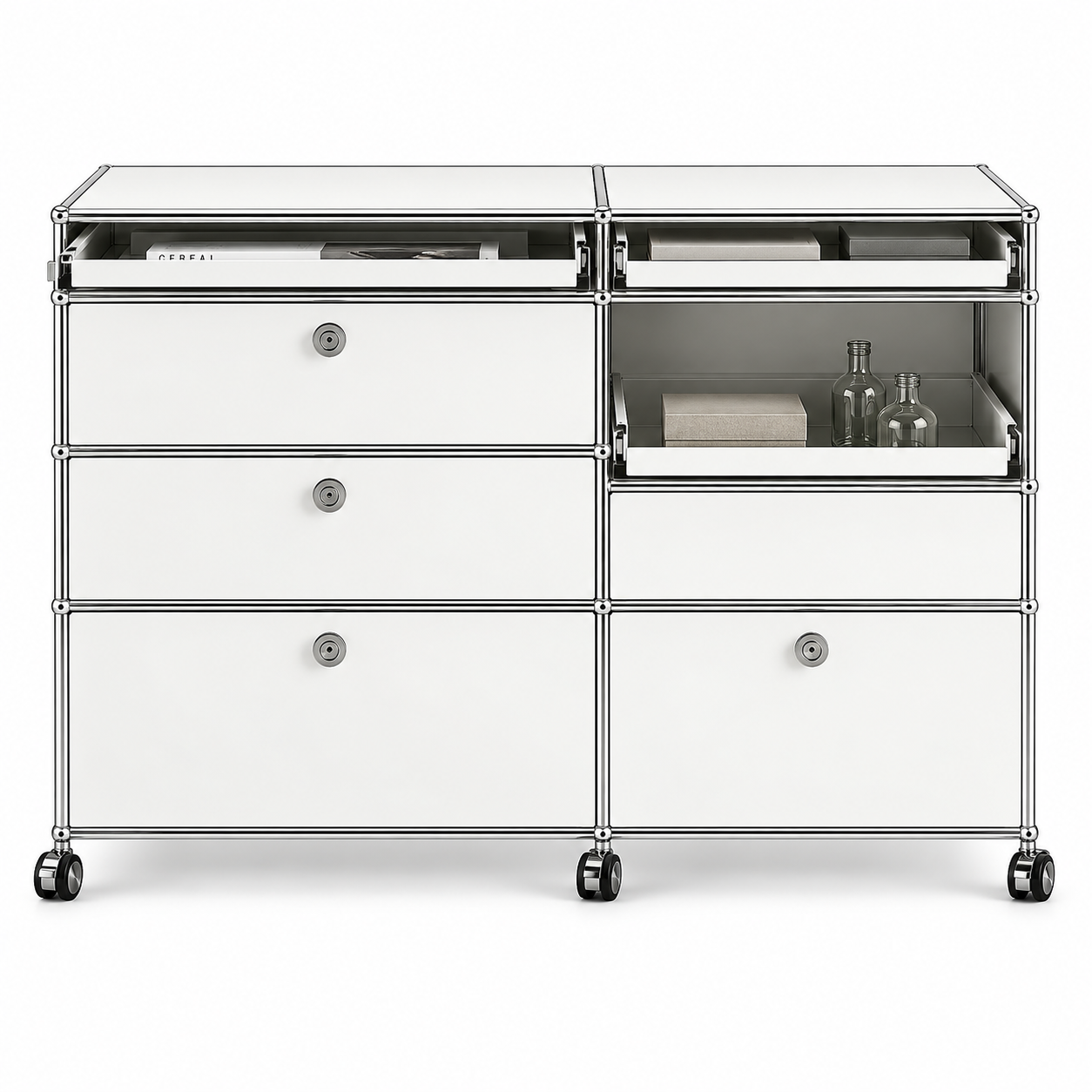
The practical advantage is not just storage capacity. It is access. A tray can temporarily become an extension of the work surface, then slide back into the unit when the task is finished. In a coffee corner, that might mean keeping cups or tools within reach. In an office, it might mean storing stationery or documents that are needed during focused work but should disappear afterward.
Keep enclosed storage for visual noise
Open storage is useful because it makes objects immediately accessible, but too much open storage can make a room feel busy. Enclosed compartments provide the opposite function: they absorb the items that are necessary but not visually important.
A flexible storage unit works best when the two are balanced. Display objects, books or frequently used items can occupy open areas, while cables, supplies, spare accessories and bulkier objects can stay behind closed panels. This combination makes it easier for one cabinet to serve both practical and visual roles.
The SVEORA mobile storage cabinet is designed with both open storage and enclosed compartments, which means the user can decide what should remain visible and what should be hidden without adding a second piece of furniture.
Think in zones rather than rooms
One of the most useful ways to plan mobile storage is to stop thinking in terms of room names and start thinking in terms of activity zones. A “coffee zone” could exist in a kitchen, living room or office. A “serving zone” could support dining indoors or move closer to a terrace door. A “project zone” could appear beside a desk for one task and beside a worktable for another.
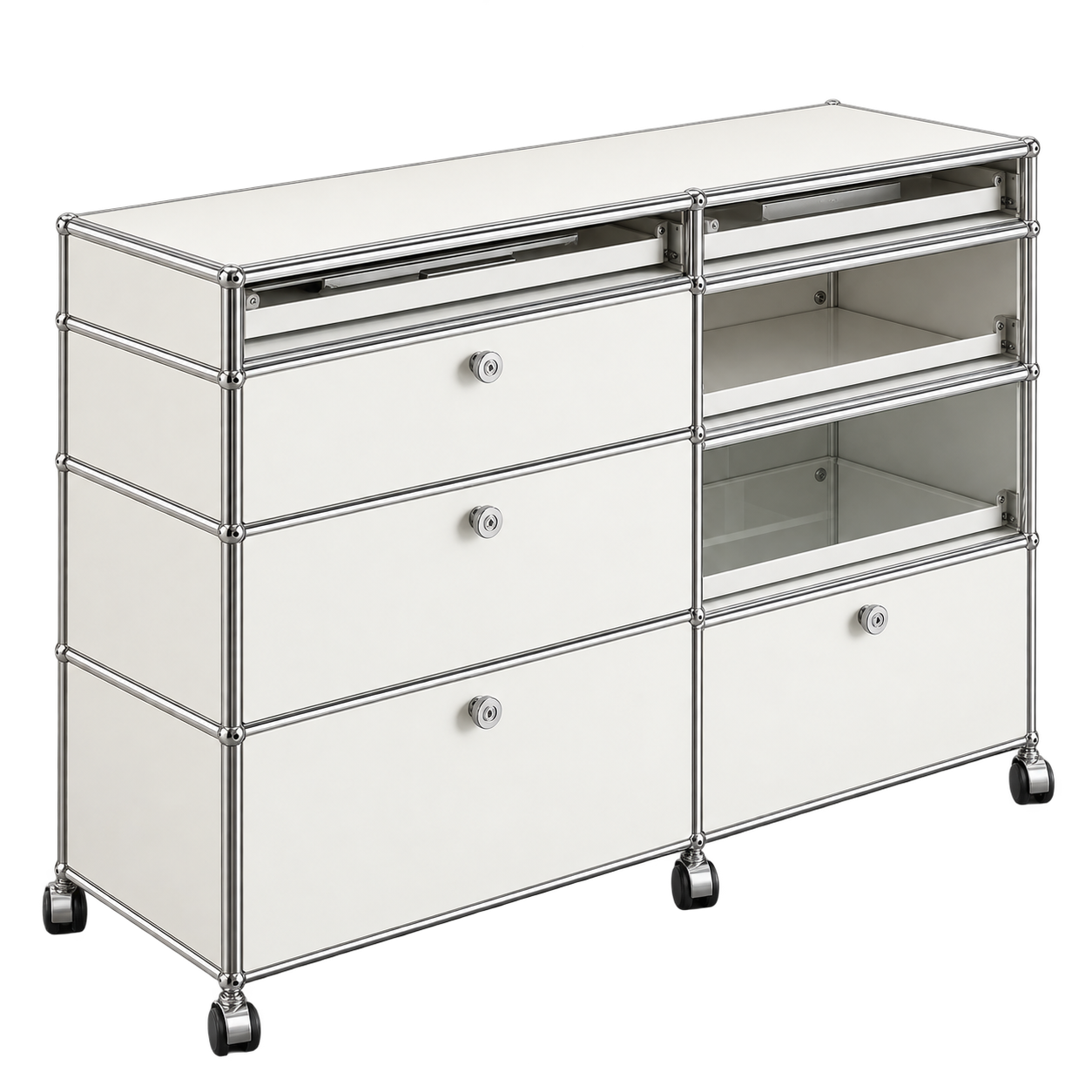
This way of thinking makes the furniture more adaptable because its usefulness is tied to an activity rather than a fixed location. It also reduces the pressure to buy separate cabinets for every area. One well-organized mobile unit can sometimes support several zones at different times of day.
Use color to signal function—or to let the cabinet disappear
Because the cabinet is available in multiple color options, it can either act as a visual accent or blend into the surrounding interior. A deep red, emerald green, navy or orange finish can make the unit feel like a deliberate focal point, especially in a neutral room. Cream beige, gray, ivory white or black can make the storage feel quieter and more architectural.
Color can also help define the cabinet’s role. A stronger color can make a mobile coffee or bar cabinet feel intentional rather than temporary. A restrained neutral can help an office storage unit stay visually calm even when it moves between work areas. The important point is that mobility does not have to make furniture feel improvised; a consistent finish and clear structure can keep it visually anchored even when its position changes.
Leave enough space for the cabinet to actually move
Mobility only helps if the furniture can travel through the room. When planning a location, consider the path the unit will take rather than just its parking position. A narrow passage between a table and sofa may make frequent movement inconvenient. Rugs with thick edges, crowded corners or objects left on the floor can also reduce the practical value of caster wheels.
A better approach is to identify two or three realistic positions the cabinet might use—for example beside the dining table, against a living-room wall and near a desk—and make sure the route between them stays reasonably clear. This turns mobility into a real design feature instead of a specification that is rarely used.
Let one unit change role over time
Flexible furniture becomes most valuable when the room itself changes. A cabinet that begins as a coffee station might later become dining storage. A living-room organizer might move into a home office. A project-space cabinet might eventually serve as display storage.
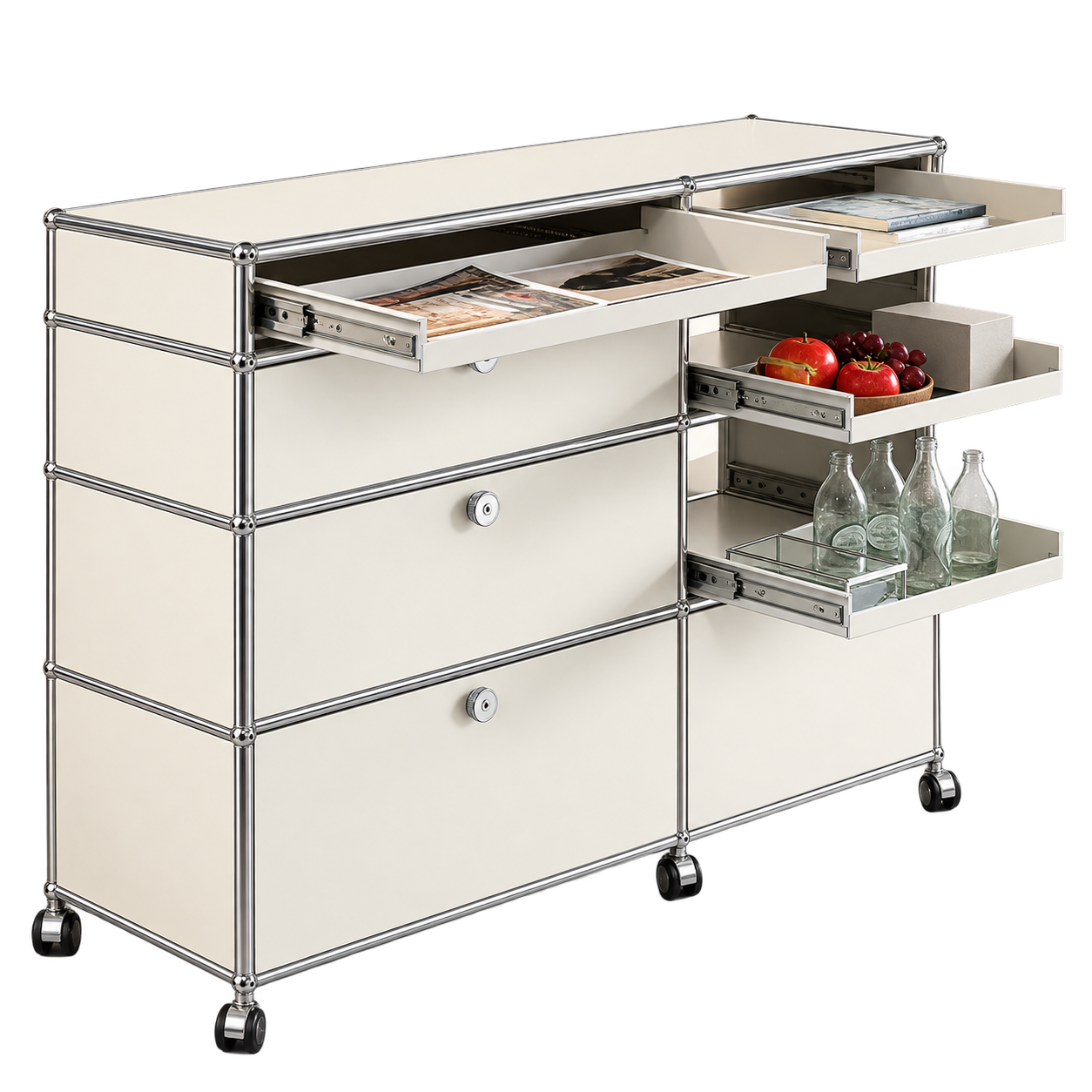
The combination of caster wheels, pull-out trays, open storage and enclosed compartments makes this kind of reuse easier because the unit is not defined by one very specific task. Its structure stays useful even when the contents change.
A practical approach to flexible interiors
Not every piece of furniture needs to move, but one mobile storage element can make a room noticeably more adaptable. It can bring frequently used items closer, support temporary activities, reduce the need for duplicate storage and make it easier to clear space when the room changes function.
For interiors that combine living, dining, coffee, office or project uses, the strongest benefit is not simply mobility itself. It is the ability to reorganize the room without replacing the furniture. Explore the USM Modular Mobile Storage Cabinet with Pull-Out Trays to see how pull-out trays, enclosed compartments, open storage and caster wheels can support a more flexible everyday layout.